
Evening primrose oil (EPO) is one of those supplements where community sentiment and trial data tell different stories. Women in perimenopause threads talk about it as genuinely helpful for hot flashes and breast tenderness. Controlled trials have been less convincing. We include it as an honest mention rather than a confident endorsement.
What it is
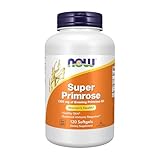
Oil from the seeds of the evening primrose plant, rich in gamma-linolenic acid (GLA), an omega-6 fatty acid. Typical doses are 500–1,300mg per day, often divided.
What the trials show
For hot flashes: limited, mixed, and mostly underpowered trials. Some show modest improvement; many show no better than placebo. No convincing consensus.
For breast tenderness: slightly more supportive evidence, particularly for cyclic breast tenderness in perimenopause, but still not robust.
For menopause symptoms broadly (mood, sleep, skin): community use exceeds trial support.
Why women try it anyway
Affordability, accessibility, and the fact that for some women — impossible to predict in advance — it does seem to help. Short of running your own 3-month trial, there’s no way to know if you’re one of the responders.
Who should avoid it
- On anticoagulants (warfarin, apixaban, etc.) — EPO can thin blood modestly
- With seizure history — rare case reports of lowered seizure threshold
- With scheduled surgery in next 2 weeks — stop 7–14 days before
- Pregnancy or trying to conceive — discuss with clinician
Dosing and trial length
Typical protocol: 1,000mg twice daily with food, for 8–12 weeks. Side effects when they occur are usually mild GI upset.
Community sentiment
Stronger positive sentiment than the trial data would predict. Common report: “didn’t do much for hot flashes alone but added to magnesium and B-complex, I sleep better.” Harder to attribute benefit cleanly when multiple supplements are in play.
Bottom line
Low risk, modest cost, modest-at-best evidence. Reasonable to try for 3 months if you want a non-hormonal option for hot flashes and you’ve addressed the easier targets (alcohol, sleep hygiene, caffeine). Don’t position it as a substitute for HRT if HRT would be clinically appropriate and your symptoms are severe.