
Black cohosh (Actaea racemosa) is probably the most widely used herbal supplement for menopause hot flashes. It’s also one of the less clean evidence stories in the category — some trials show a modest benefit, others show no better than placebo, and systematic reviews have generally concluded the evidence is insufficient to strongly recommend it.
What black cohosh is
A North American plant whose root has been used traditionally for women’s health. Most clinical studies have used a standardized extract (Remifemin being one of the best-studied) at 20–40mg twice daily.
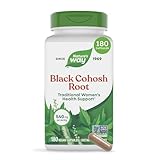
Nature's Way Black Cohosh Root
Best for:Hot flashes — if you want to try
What the evidence suggests
- For hot flashes: Some randomized trials show modest improvement vs placebo; others don’t. Meta-analyses are mixed. It’s not as consistently effective as HRT or the SSRIs with hot-flash evidence.
- For mood and sleep: Weaker and less consistent evidence. Some women report subjective improvement.
- For joint pain, weight, or cognition: Not a well-supported indication.
The liver question
There have been rare case reports over the years of hepatotoxicity associated with black cohosh products. The causal relationship is debated — some cases involved products that may not have been true black cohosh, and the absolute rate appears very low. Regulatory bodies in Europe have required warning labels; the FDA has not mandated one. Most mainstream guidance considers black cohosh reasonably safe for short-term use (up to 6 months) but suggests caution with long-term high-dose use.
Don’t use black cohosh if you have active liver disease or elevated liver enzymes. If you develop yellowing of skin or eyes, dark urine, or right-upper-abdominal pain while taking it, stop and see a clinician.
Who might reasonably try it
- Women who want a non-hormonal option and have already addressed simple triggers (alcohol, overheating)
- Women for whom HRT isn’t appropriate or desired, and who understand the evidence is modest
- Short-term use (3–6 months) rather than indefinite
Who should skip it
- Women with liver disease or a history of hepatitis
- Women who would be better served by HRT and are using black cohosh as a stalling tactic
- Women already on multiple herbal products with overlapping effects
How to set expectations
If you try black cohosh, give it 8–12 weeks at a standardized dose before judging. If hot flashes haven’t meaningfully improved, it’s not going to. And even in positive trials, the magnitude of improvement is generally smaller than HRT would produce — so “black cohosh didn’t work” and “HRT wouldn’t work for me” are not the same conclusion.
Community sentiment
Women in menopause communities report a wider range of experiences with black cohosh than with magnesium glycinate. Some describe meaningful improvement; many describe no effect. The most candid users tend to position it as “worth a try” rather than “definitely works.”
The bottom line
Black cohosh is a reasonable non-hormonal try for hot flashes if you understand the evidence is modest and mixed. It’s not a strong substitute for HRT when HRT would be appropriate. Short-term use, standardized extract, watch for liver symptoms.