
Collagen is one of the most-Googled menopause supplements — and one where the hype has run ahead of the evidence. The honest answer: modest benefit for skin elasticity with consistent use, smaller and less certain benefit for joints, and not a magic bullet for either.
What it actually is
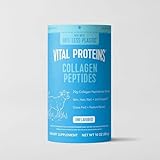
Hydrolyzed collagen peptides — bovine or marine in origin — broken down to small peptides that are absorbed and distributed in the body. The idea that “eating collagen” rebuilds your collagen is oversimplified; what seems to matter is the amino acid building blocks and possibly some signaling peptides that reach the skin and joints.
Evidence for skin
The skin elasticity story has the better data. Multiple trials of 2.5–10g daily for 8–12 weeks show modest but statistically meaningful improvement in skin hydration and elasticity measurements. Subjective benefit (people reporting “my skin looks better”) is more variable.
Evidence for joints
Weaker and more mixed. Some trials of collagen peptides for osteoarthritis joint pain show modest benefit; others don’t. If your joint pain is driven by menopause-associated estrogen loss, HRT often produces more dramatic relief than collagen will.
Evidence for hair
Thinner still. Some indirect support via improved protein availability and scalp circulation, but dedicated trials are limited.
Dosing
Most studies are in the 10–20g daily range. At that dose, you’re essentially adding a small amount of protein to your diet along with the peptides. Take it with vitamin C to support collagen synthesis.
The meaningful caveat
Collagen peptides are low in tryptophan and not a complete protein source. They count as additive, not substitute, for the protein you should be getting from food. Menopausal women typically need more total protein (roughly 1.2–1.6g per kg body weight per day is a reasonable target, often higher than non-menopausal intake). A collagen supplement without adequate overall protein intake is an incomplete intervention.
Community sentiment
Women in perimenopause communities report a range of experiences — some are true believers (“my skin and hair transformed”); many describe subtle improvement over months; a minority notice nothing. The “nothing happened” group is real and worth hearing.
Who can probably skip it
- If you’re already on HRT and it’s addressing joint pain
- If your protein intake is already adequate and skin/hair concerns aren’t prominent
- If you’re spending money on this instead of vitamin D or omega-3, which have stronger evidence
Who might try it
- You want to support skin elasticity and hair, and you’ve already got the fundamentals covered
- HRT isn’t an option or doesn’t address your joint concerns
- You can commit to 8–12 weeks consistently to judge
Bottom line
Collagen peptides are a reasonable addition, not a foundation. Skin evidence is the strongest; joint evidence is weaker. Expect modest results and give it 2–3 months before judging.
Mix into morning coffee or a smoothie. Take with a source of vitamin C. Aim for 10–20g daily. Give it 8–12 weeks before deciding.